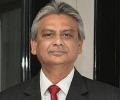
Patra, as executive director of the central bank, was the principal advisor to the Monetary Policy Department since July 2012.

Uttam Prakash Agarwal alleged that Citax and Braich offers were incomplete and did not include firm commitment as to the price, size, timings, confirmation from the banks about availability of the funds.

This comes against the backdrop of instances of indicative ratings given by agencies, for which there are no written agreements.

If the fiscal deficit for the year can be maintained at Rs 7.04 trillion, the deficit as a percentage of GDP will slip to 3.44 per cent
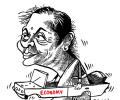
While the situation Sitharaman finds herself in may not be that good, how does it stack up against her three immediate predecessors Pranab Mukherjee, P Chidambaram and the late Arun Jaitley?
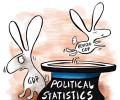
It is also likely to assume a deflator of around 4 per cent. That could take the nominal GDP outlook for FY21 to around 10 per cent. It is this nominal GDP forecast on the basis of which the finance ministry is calculating key Budget targets like the fiscal deficit as a percentage of GDP and tax revenue growth for the coming year.
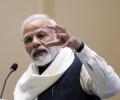
Starting today, Modi and top officials in the Prime Minister's Office will be briefed by various central ministries and departments on their plans as well as agenda for the next five years. They will also apprise the PMO of the work they have done so far in realising the agenda of government's second term in office.

Finance Minister Nirmala Sitharaman will present her second Budget a little more than a month from now. Like any other FM, Sitharaman will depend on her team of bureaucrats and advisors to frame and present the Budget.

Thanks to the recapitalisation by the government and measures taken by the central bank, collapse of any large housing finance company won't pose as big a risk as it had six months ago.

In 2009, the UPA government, had announced a slew of measures to boost liquidity in NBFCs. These included a scheme for providing liquidity support to NBFCs having assets size of over Rs 100 crore through a SPV.
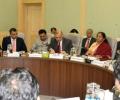
At a pre-Budget meeting, the FM was asked to ensure that NBFCs come out of the liquidity crisis they are facing with the help of RBI. They also spoke about the futility of trying to achieve a 3 per cent fiscal deficit target over the medium term.

RTGS is used to transfer large sums, the minimum amount being Rs 2 lakh. This mode is used primarily to facilitate trade and market transactions. The primary beneficiary would be the capital markets.

Even with the possible expenditure roll-overs and off-budget financing, the fiscal deficit target will not be met. The FRBM Act, after its amendment in 2018, allows a fiscal deficit slippage of not more than 0.5 per cent for any given year, provided there are justifications. These justifications include war, national security, severe collapse in the agriculture sector, a major natural calamity, big structural economic reforms, or the decline in real output growth of a quarter by at least 3 percentage points below its average of the previous four quarters.
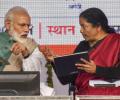
In the 2020-21 Budget, the prime minister and the finance minister are keen to stamp their narrative, after various rollbacks following the previous Budget, said top government sources. Besides the scheduled meetings, the sources said, the Prime Minister's Office is expected to hold several meetings with top secretaries and officials on various ongoing schemes, their performance and also how some of them could be tweaked for better results.

States are planning to pass resolutions in their legislative assemblies; however, such tactics will be used as the last resort if the Centre continues to stall allocations.

Opposition parties, though resigned to the fact that they lack the numbers to defeat or stall the bill in the two Houses, have decided upon different tactics that they would employ to highlight their reasons for opposing it.

Unsure about having the numbers in the Rajya Sabha, the Congress, the Trinamool Congress and other parties have decided they will create awareness about the "divisive" nature of the proposed legislation, reports Archis Mohan.

In a resolution passed at its national assembly in Haridwar, the SJM said the Modi government's proposed strategic divestment of PSEs was an "imprudent business decision" and "against national interest".

Though the NITI Aayog did not give its estimates for the required GDP growth at constant prices, economists pegged it at 9 per cent, a feat not seen since the GDP series was revised with 2011-12 as the base year.

As the Congress party prepares to launch protests against the economic slowdown, Chhattisgarh Chief Minister Bhupesh Baghel tells Archis Mohan that his state has escaped its effects as his government has pursued policies that have put money in the pockets of workers, farmers, housewives and tribals, which has helped spur demand.
 © 2025 Rediff.com - Investor Information - Advertise with us - Disclaimer - Privacy Policy - Sitemap - Feedback - About us - Terms of use - Grievances